Sunday, June 30, 2013

Less Thinner, More Color

Last Saturday my friend, Arlene Daniel, and I headed up to Galax, North Carolina to participate in a plein air paint-out at beautiful Mount Vale Vineyards. We left early so we could scout out a good spot to paint; we succeeded in a big way. We found shelter from the sun while overlooking a gorgeous mountain vista that was still under the cover of a morning fog.

Perfect spot to paint at Mount Vale Vineyards; shade,
fun people and lots of lovely views to paint


I noticed that the church to our right was in a veil of soft fog, which is one of my favorite things to paint. It is hard to paint fog as it lifts quickly and you are left with a lot of bright color and detail, none of which you wanted to see until the painting was completed. The trick is to get the colors and values you see onto the canvas right away, take a mental snapshot and keep painting what you saw before the fog lifted. This is not an easy task. I also took a photo in case I needed reference for later. This painting came about quickly and with less effort than usual, but I wasn't sure why.

Painting of early morning fog at Mount Vale Vineyard.

Now that the fog was gone, I chose another view to my left and began to work on that. Same thing happened. The painting went quickly and I was pleased with it. I had to figure out why!

Painting of distant farm after the fog lifted.

I took stock of how I had been painting that morning and I realized that I had not been dipping my brush into the Gamsol (mineral spirits) nearly as often as I usually do. I had been cleaning paint from my brush with a dry paper towel and avoiding the Gamsol. This kept my paint thicker and stronger in color. I was able to lay the color on without blending it in, which gave a cleaner look to the painting. I was forced to mix the in between colors and paint them on the canvas rather than creating a muddy mid-color with a brush full of paint thinner.

This week in the studio, I continued using this new method and was very happy with the results. I finished two paintings that I had started months ago. One had been going well and I was a bit afraid to start work on it again - the other one had problems. I finished both and am pleased with both, but that's not to say I won't find something to fix later!

Traveling with Family - 11x14 Oil

Three Dancers - 12 x 16 Oil


Sunday, May 26, 2013

Goat Lady Dairy - Tate Family Art Collection

The Piedmont Outdoor Painting Society (POPS), of which I have been a member for over 12 years, has had the privilege of painting at many unique farms due to our collaboration with the Piedmont Land Conservancy.


POPS Members with Steve Tate at The Goat Lady Dairy
Keeping Watch - pastel

It was in 2005 that I first painted at the Goat Lady Dairy, founded by Ginny Tate, in Climax, NC.

Two Red Barns - plein-air painted at the Goat Lady Dairy in 2005

We held an exhibit of paintings we had done en plein air at Piedmont Land Conservancy sites and also studio pieces done from photos we had taken. The Tate family members bought several of our pieces. The fun part was that they were buying them as Christmas gifts for each other! The artists knew who bought what, but we had to be hush-hush! Ginny Tate later told me that this was the first time her family had become interested in collecting art and she was so thrilled with the enjoyment it had brought to them.

The Kids at Goat Lady Dairy - Tate Family Collection

Chicks at Goat Lady Dairy - Tate Family Collection

On a later visit to the farm I spotted Mrs. Tate on the deck, potting some plants, and snapped her photo. When I delivered the painting I had done of her to be exhibited at the Dairy's dining hall, she said she wanted to purchase it. I was so thrilled and flattered.

    
Mrs. Tate - Spring Planting - Tate Family Collection
 

Sadly, Mrs Tate and Ginny have both passed away since then. The latest piece I did of someone at the farm was this pastel that I painted of Ginny, walking through the yard carrying two of her kids!


Ginny Tate, founder of the Goat Lady Dairy.
Many thanks to Steve Tate for his permission
to paint from this family photo.

You can experience tours of the farm and a gourmet dinner of fresh, local food at the dairy's dining room. Details can be found at their website: www.goatladydairy.com.

Goat Lady Dairy products can be found at the NC Farmer's Market at Sandy Ridge Rd. exit off I-40 west of Greensboro.

Sunday, April 28, 2013

Pastels: Get You Hands Dirty

The past two weeks at the Assisted Living Center, where I am volunteering, we worked with pastels.

I sat and drew with them rather than teaching.
The first week, I took an assortment of old pastels and let everyone just choose a few out of the box. I sat at the table and drew with them, rather than attempt to teach. It was more fun for me and they just did their own thing, asking questions when they needed to. I realized quickly that I didn't have enough stuff when they started to ask for specific colors, including black and white, and something with a smaller point for details.

Although many pastel artists never pick up a pure black or white stick and they don't paint every detail, I didn't think it was the time to tell these folks any of this!

They had to use these in place of black and white
 I dug around in the box for the darkest and lightest thing I could find and they had to make do. As for details, they had to use the pointed corners of the square sticks.

The other mistake I made was including some soft pastels in the mix. Way too messy! Everyone was clamoring for paper towels and I had to run around the halls looking for someone to find some and dampen them for me.

I decided to go back to watercolors the next week, until the Activity Director told me how excited they were about working with pastels. One lady who had moved in recently was thrilled with her drawing and had a good day, which is something to cherish in this situation. Good thing I got that piece of news before the next class!

We needed more colors so I took this box to class the next week.

The following week I filled a bigger box with more colored sticks and a box of pastel pencils for details. I took out the messier soft pastel and added wet wipes for our hands to my gear. It was a hit again. People left the room telling everyone they met in the hall how much they loved pastels.

Pastel pencils for the details.
Next week they will wear their oldest clothes, those who watched from the sideline may join in and I will bring wax paper to cover the masterpieces. Each time is a lesson for them and for me.

Sunday, April 14, 2013

The Four Planes

After a three day outdoor landscape painting workshop with D. Eleinne Basa, my friend and I headed to Kure Beach to create some plein air paintings for the annual Painting North Carolina show at Germanton Gallery.

 I had taken Eleinne's workshop two years ago, but I managed to retain a lot more this time. She presents a wealth of info and refers often to Carlson's Guide to Landscape Painting by John F. Carlson which is a great reference.

Carlson's Guide to Landscape Painting, 1958


One of the princples he adheres to and that Eleinne emphasized in her teaching is the four planes of the landscape. To create a believable landscape, the following value relationship should be retained. The four planes, from darkest to lightest, are uprights (trees), slanted planes (mountains), ground/water, and sky. 

The sky is lightest because it is the source of the light, the other three are based on their angle to that light source. Possible exceptions are snowy ground and man made structures. I finally understand this!

A second truth is that to create depth in the scene, you must lighten and cool the colors that are in the distance and warm those closer to you. Often the scene you are viewing while painting will not follow these guidelines. Photographs are even less likely to conform. 

That is why we need an artist. The artist must create this relationship in the work to make a believable painting.


Here is a photo I took before I began to paint in case I might need it as a reference later. Notice how the trees in the distance look almost as dark as the trees in front and almost everything in the photo is too dark?

Photo taken before beginning to paint.


To paint this piece, I had to lighten and cool the trees in the distance by making them more bluish. The ground plane had to be lightened and made warmer. I exaggerated the angle of the trees to emphasize their attraction to each other and left out the distracting yellow gate to make sure the tree on the right got most of the attention.

The finished painting. Opposite Attraction.

I now need to practice so it becomes second nature when I go out to paint.

Sunday, March 31, 2013

First Day Out

Friday was my first day painting outdoors in 2013. It was a nearly perfect day as some friends and I set up our easels at a farm in Quaker Gap, NC. The first day out is usually a practice run and a waste of paint, but this time I came back with 2 paintings that I really liked.

I happened to pick up my copy of Hawthorne on Painting before I left the house and glanced quickly at a couple of pages. Charles Hawthorne was an American painter who founded the Cape Cod School of Art this book was compiled by Mrs. Charles Hawthorne and contains notes taken by his actual students.

I found purples, greens and oranges and exaggerated them

I took a few of the words from that book out with me that morning. I held on to three ideas that appealed to me. Find the colors you see in things and exaggerate them, use a large brush or a palette knife, and get the spots of color in their proper relation.

Using a 1" brush and a palette knife allowed me to keep it simple.


One last piece of advice I took from Hawthorne was to stop painting when you no longer know what you are doing. This might be the best one. This time I came back with two fresh little paintings because I stopped in time.

Friday, March 15, 2013

Through the Eyes of a Beginner

Helping seniors learn to paint

Last week I began volunteering at an assisted living center near my home. They have tons of activities but only one activity director who relies on volunteers – a lot. When I first met the director, she handed me an 11"x17" calendar showing all the programs and asked if I saw anything that caught my interest.

I was overwhelmed and said, "Well, I am an artist if that helps." Bingo! Her art class was about to be cancelled due to her lack of time, so now I am to be there Tuesday afternoons to help people enjoy painting.

The residents at the assisted living center where I volunteer use
small trays of watercolor like the ones we used in elementary school.

Of the five ladies that showed up, one just wanted to watch, one was a fairly accomplished painter, one was really excited about learning to paint better, another wanted to paint inside the lines on a pre-printed drawing and the last was a total beginner.

The beginner had a hard time seeing, but with the ONLY big brush we had and a little guidance, she painted an impressionistic painting of a robin sitting on a golden branch of flowers.

Since she had no previous knowledge, she had no reason to question what I told her. I asked her to look at the photo she was working from, find the big shapes, notice how dark or light they looked to her and put the paint on the paper to show that.

Since her eyesight was poor, she asked me what color would work best. When she was unsure about what to do with the background, I told her to define the shape of the bird by painting around him with the color of the background.

I was pretty excited about what she was able to create with no past experience in painting and an open mind. She had already learned about values, colors and negative shapes in less than an hour even though she doesn't realize that yet!

I hope all the ladies come back next week and bring a friend. But we really do need more paint and some BIGGER brushes!

The activity director told me I could request more supplies–
one order of brushes and supersize that please!

Sunday, February 17, 2013

Did you go to school for Art?

This is a question that people ask painters, including other painters.

Did I go to school for art? Well, I thought I did but I didn't find much. Thanks to the fact that I chose design as my major, I found good beginnings in color, design, and drawing. As for painting, I did not learn much. Illustration was a part of our program, but a very weak link with an instructor who had a narrow view of what illustration should be. People who had a strong start in a good high school art program did well, but I lacked that too!


I wanted to paint realistically which just wasn't in favor at that time. In my art history class I discovered paintings by artists whom I admired and I knew where I wanted to focus but I didn't know how to get there. I was drawn to Vermeer, Hieronymus Bosch, Pieter Bruegel and most of all, Edgar Degas. I have different favorites now, but Degas is still top of my list.

To learn to paint the way I wanted to, I "took art" from anyone who would give it to me. I took recreation center classes from local artists, Alice Bess and Dot Nowell, who gave generously of all that they had learned and encouraged me with no limits. This is where I learned basics about materials, how to mix color, find the light source in the painting, and to keep trying. They also gave me the courage and taught me how to enter shows, frame my work, display my work at art shows and, again, to keep trying. Don't give up if you are rejected from a show - just keep painting until you get good enough and you will be accepted. 

Later on I took workshops from nationally and internationally known artists, who often told me things I wasn't ready to understand. I kept hearing the same things over and over from many wonderful artists and eventually I was ready to hear them and it clicked.

Susan Lyon - a fantastic artist and great teacher - with whom I have been fortunate enough to study, taught more than I could absorb at once. I think I'll need a refresher course with her!
Here are some photos of demo by Susan and the still life set up we worked from.


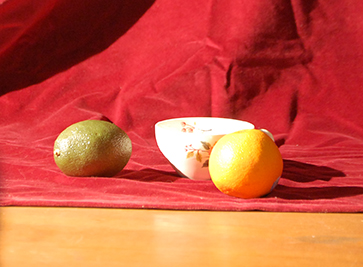
Now I understand more than I used to, but have to keep reminding myself to make use of the things I have learned, which is pretty difficult. I am still learning and don't intend to ever stop going to school for art! You can learn so much in a week long workshop - way more than you can absorb in that amount of time. Then the hard part comes; go home and paint, paint paint til you perfect it.